
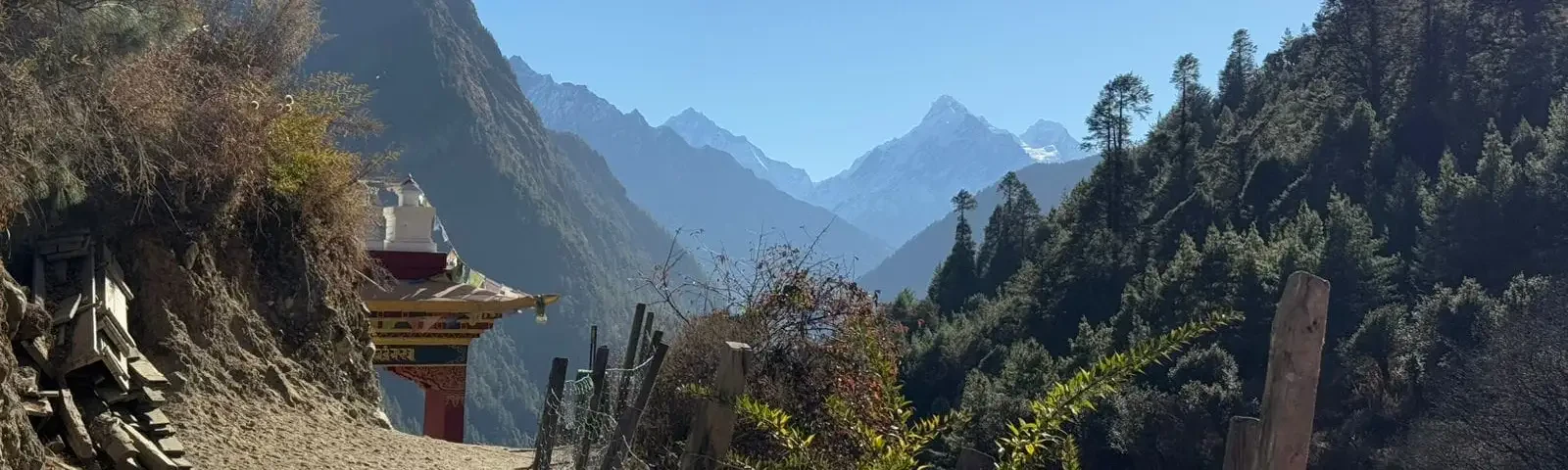
Everest Base Camp trek routes are not all the same and picking the right one can change your whole trip. The classic route from Lukla is the most popular which takes about twelve to fourteen days and passes through Namche Bazaar and Tengboche. Many first-time trekkers choose this path because it is well marked and has good teahouses along the way.
If you want more lakes and views the Gokyo route is a nice change that adds a few extra days but takes you past the beautiful Gokyo Lakes and over the Cho La pass. Trekkers who love mountains and photos often pick this one. The Three Passes trek is even longer and harder, crossing three high passes in one trip.
For something older and quieter the Jiri route is worth trying. This route was the original path used before flights to Lukla started and it takes about three weeks. Some trekkers also drive to Salleri or Thamdanda to shorten the walk. And if your legs are tired, a helicopter ride back from base camp is always an option.
Everest Base Camp Routes at a Glance
Everest Base Camp routes vary in length, difficulty, and overall experience. Some routes are short and straightforward, ideal if you just want to reach base camp and head right back. Other options take longer, taking you over high mountain passes or along quieter paths for extra scenery and challenge.
When looking at the schedule, the total days include travel and rest time in Kathmandu. The trail days show only the days you spend walking. All distances are round-trip unless mentioned.
Attribute | Classic Lukla Route | Gokyo Lakes & Cho La | Three Passes Trek | Jiri Route (Pioneers' Route) | Salleri/Thamdanda Road Approach |
Total days | 12–14 | 15–18 | 18–22 | 20–22 | 14–16 |
Trail days | 8–10 | 12–14 | 16–18 | 18–20 | 10–12 |
Approx. distance | 130 km round-trip | 150 km round-trip | 165 km round-trip | 250 km one-way to Lukla trailhead, then joins classic route | 160 km round-trip from trailhead |
Highest point | Kala Patthar, 5,545 m | Gokyo Ri, 5,357 m | Kongma La, 5,535 m | Kala Patthar, 5,545 m | Kala Patthar, 5,545 m |
Highest sleeping point | Gorak Shep, 5,170 m | Gokyo, 4,800 m | Lobuche, 4,940 m | Gorak Shep, 5,170 m | Gorak Shep, 5,170 m |
Each route starts at a different trailhead, passes through its own set of villages, and reaches base camp by a slightly different path. The classic route is suitable for most fitness levels, while the Three Passes trek is suitable only for those with prior high-altitude experience. Choosing the right one depends on how much time you have, how many acclimatization days you want built in, and whether you prefer a busy trail or a quiet one.
Classic Everest Base Camp Route via Lukla
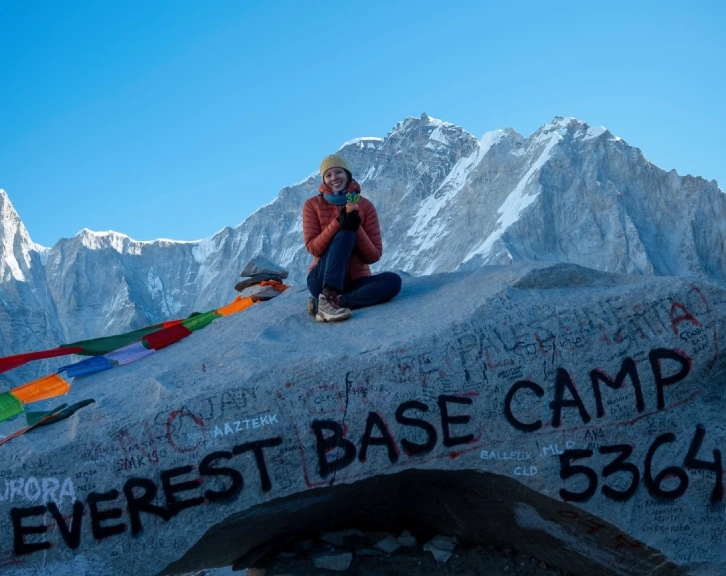
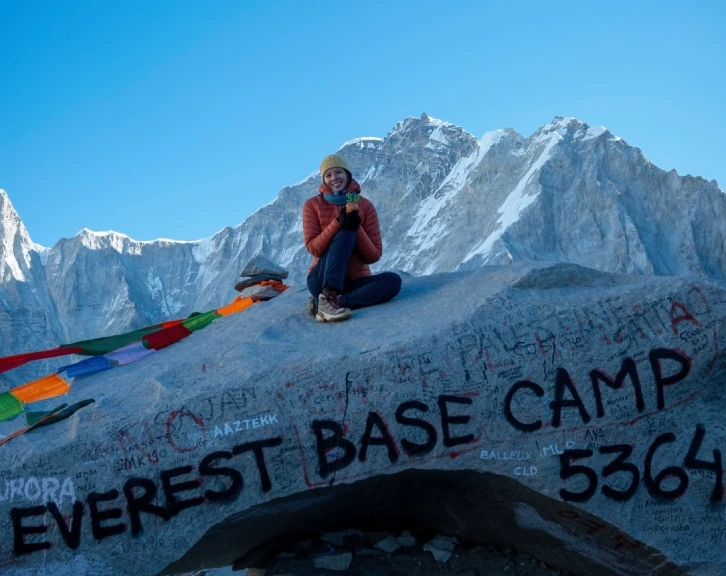
The Classic Everest Base Camp route starts at Lukla and follows more or less the same path trekkers have used for decades now. You'll normally fly in from Kathmandu to Lukla, though during the busier months those flights get moved to Ramechhap (Manthali), which means a few extra hours on the road before you even reach the airstrip. From Lukla (2,860 m), the trail runs through Namche Bazaar, Tengboche, Dingboche, Lobuche, and Gorak Shep, ending at Everest Base Camp itself at 5,364 m. Give it 12 to 14 days round trip, and if you pace yourself, most people get through it without much trouble.
Once you land in Lukla, the trail actually drops down first, toward Phakding, before following the Dudh Koshi river upstream. From there it's a fairly steady climb into Namche Bazaar, a busy little Sherpa town, and honestly a good place to slow down for a day and let your body catch up with the altitude. Keep going and you'll hit Tengboche, known for its monastery, then Dingboche and Lobuche, where the villages start thinning out and the ground gets rockier underfoot. Most people also detour up to Kala Patthar (5,545 m) along the way, it's not technically part of the main trail, but the view of Everest from up there is hard to skip.
It's not hard to see why this is the route so many first-timers end up choosing. The path is well trodden, teahouse trekking here means places to eat and sleep show up right when you need them, and passing through all those Sherpa villages gives the trek a lived in feel rather than something that's just wild and empty. So many people before you have walked this exact trail that it's basically become the default, most trekking companies build their whole itinerary around it.
Route map and village sequence
The classic route follows the village sequence Lukla, Phakding, Namche Bazaar, Tengboche, Dingboche, Lobuche, Gorak Shep to Everest Base Camp. Here's the full chain with elevations, so you can see the climb at a glance:
- Lukla 2,860 m
- Phakding 2,610 m
- Namche Bazaar 3,440 m
- Tengboche 3,860 m
- Dingboche 4,410 m
- Lobuche 4,940 m
- Gorak Shep 5,170 m
- Everest Base Camp 5,364 m
Walking from Lukla to Phakding takes only two or three hours. It is slightly uphill then crosses the first suspension bridge over the Dudh Koshi river.
The walk from Phakding to Namche is much steeper. You gain more than 800 meters in height as you walk along the river and head up a long hill to reach town.
From Namche to Tengboche, the path gets a little easier. It goes down into a valley before heading back up. Along the way, you will see side paths that lead to nearby villages like Khumjung.
This is not the only way to hike the mountain. At Namche, one path turns toward Gokyo Lakes. Near Dingboche, another path leads to the Three Passes route. Both paths meet back up with the main trail higher up. Because of this, you can stick to the main path the whole time or take a side route whenever you like.
Duration, distance, and altitude
The classic Everest Base Camp route takes 12–14 days and covers approximately 120–130 km round trip, measured trail days only, not including rest days in Kathmandu. Trekkers walk 5–8 hours a day on average. The highest reached point is Kala Patthar at 5,545 m, a viewpoint many hike up to for sunrise. The highest sleeping point, by contrast, is Gorak Shepat 5,164 m, since there is no tea house on Base Camp itself.
That last part trips a lot of people up when they're planning: reaching 5,364 m at Everest Base Camp is not the same as sleeping there. You sleep lower, at Gorak Shep, and only pass through or climb above that height during the day. Kala Patthar sits even higher again, and it's a separate side trip rather than part of the main trail to Base Camp.
Elevation gain isn't spread evenly across the trek either, as the mini profile above shows. Some days barely climb at all, Namche and Dingboche both get a full acclimatization day with no real elevation gain while others, like the push from Phakding up to Namche, gain over 800 m in one go. Day 9, from Gorak Shep up to Kala Patthar, is where trekkers hit that highest reached point before dropping back down to sleep.
Who should choose it?
The classic route is suitable for first-time high-altitude trekkers who want to reach Everest Base Camp without needing any technical climbing skills. There's no rope work, no glacier travel, no scrambling, just walking, some of it steep, on established paths and stone steps. Still, this is Everest Base Camp for beginners in name only when it comes to altitude. The real challenge isn't the terrain, it's the thin air above 4,000 m, and that catches out plenty of otherwise fit trekkers who assume fitness alone is enough.
If you've got limited time, the classic route is generally the route to pick. Anyone with fewer than 15 days available should default to the classic route rather than the longer variants, since it's built around the minimum days needed to acclimatize safely. It's also the best route for 12 or 14 days specifically, the window most people can actually fit into a Nepal trip.
Not sure how many days to set aside, or want to compare the classic route against Gokyo, Three Passes, or Jiri side by side? Our EBC package page lets you pick anywhere from 8 to 18 days and see what each length includes.
Everest Base Camp via Gokyo Lakes and Cho La
The Everest Base Camp via Gokyo Lakes route leaves the classic trail at Namche Bazaar and branches northwest into the Gokyo Valley, away from the crowds heading straight up toward Tengboche. From there it visits the turquoise Gokyo Lakes, climbs Gokyo Ri (5,357 m) for what's genuinely one of the best panoramas in the whole Khumbu, crosses Cho La (5,420 m), and reconnects with the classic EBC corridor near Lobuche. Most people take 15 to 18 days over it.
Worth clearing up since this trip helps people up a lot: yes, this route still gets you to Everest Base Camp. It's not some Gokyo-only detour that skips the main goal, but just a longer, more scenic way of getting there. The Gokyo Lakes trek tacks on the lakes, the Ngozumpa Glacier crossing, and an actual mountain pass, on top of everything the classic route already covers, Nothing gets cut.
What really sets it apart comes down to three things - the lakes, the quieter trails, and just how much the scenery changes along the way. Past Namche, the crowds thin out noticeably compared to the direct path toward Base Camp, and the landscape shifts from river valleys and forest into glacier and high alpine lake. Most trekkers doing it a second time say that variety alone makes it a far richer trip than the out and back classic route on its own.
Route sequence
The Gokyo trek serves as a scenic side path that eventually loops back into the main route to Everest Base Camp. Starting out from Namche Bazaar, you trek up past quiet spots like Dole and Machhermo before arriving at Gokyo village, resting right beside a bright turquoise lake. Because Dole and Machhermo sit off the primary trail, they stay much quieter and draw far fewer crowds.
Leaving Gokyo, things get a bit more demanding. You walk across the Ngozumpa Glacier, Nepal's longest, and then tackle the hike over Cho La Pass. With loose rocks, icy patches, and steep drops, this section is easily the trickiest leg of the whole journey, which is why this version gets a higher difficulty rating than the regular trek. After descending the pass, you reach the small settlement of Dzongla and reconnect with the standard trail at Lobuche, following it onward to Gorak Shep and Base Camp.
Most people prefer taking this loop clockwise, hitting Gokyo and Cho La before heading up to Base Camp. This direction helps your body adapt to the elevation slowly, giving you crucial time to adjust to the thinner air. Heading to Base Camp first and coming back through Gokyo is possible, but it forces you up much faster with way less time to acclimatize.
Main attractions
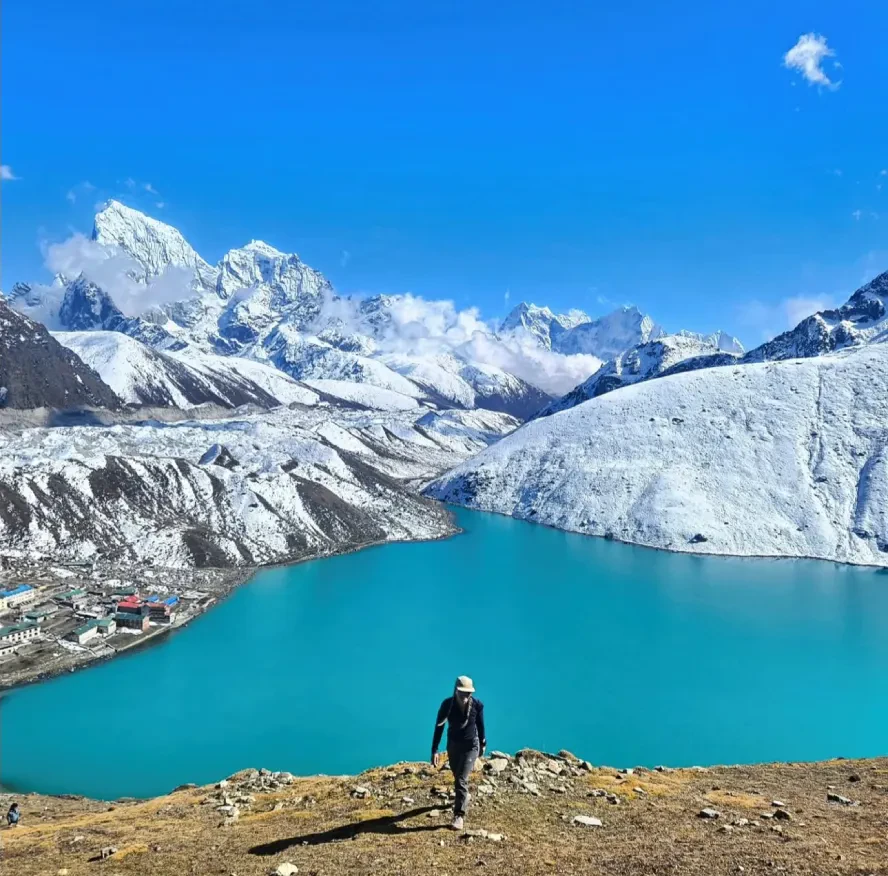
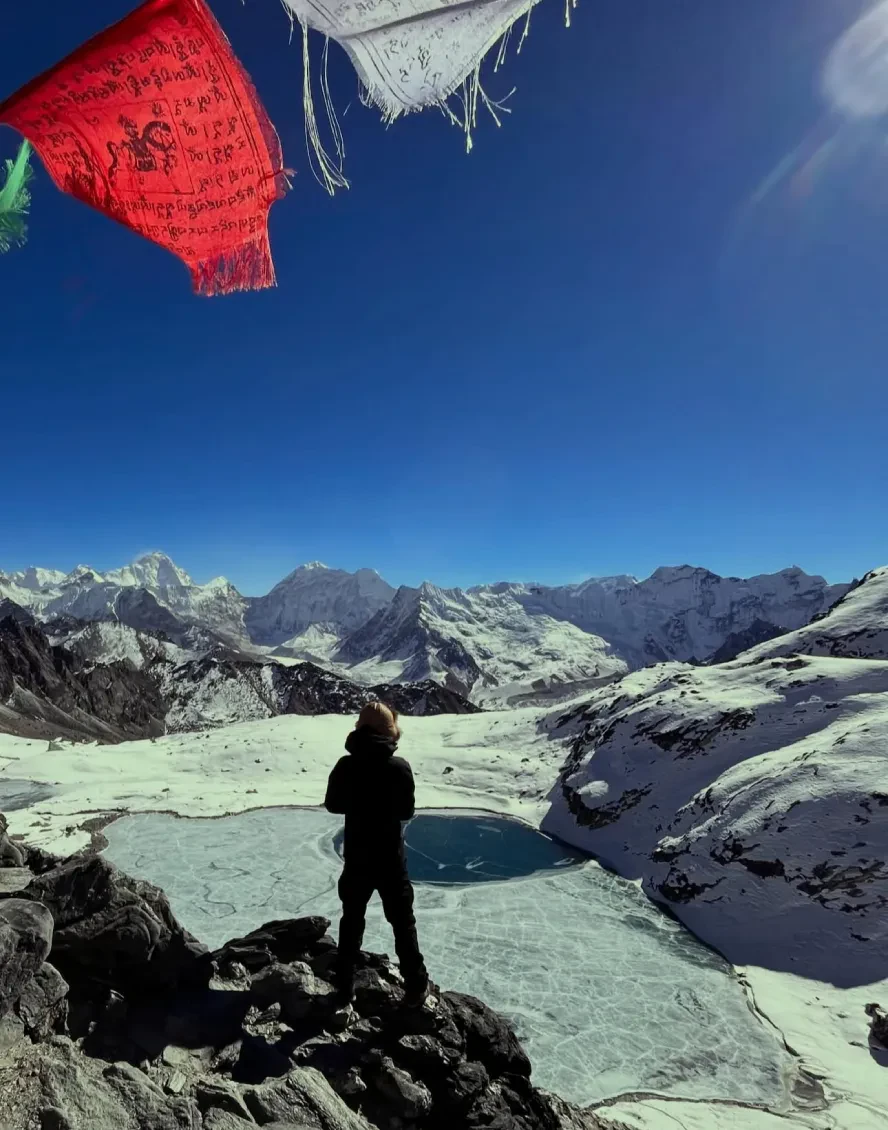
The main attractions of the Gokyo route are the Gokyo Lakes, Gokyo Ri, and honestly, just how much quieter the whole thing feels compared to the busier Base Camp path. The lake scenery is what really sets this route apart. A string of turquoise alpine lakes sits below Gokyo village, and somehow the water keeps that color even on grey, overcast days. It's part of why this variant has picked up such a following among photographers, people who've already done the classic trek once and want something a bit different the second time round.
Then there's the Gokyo Ri climb. It's a steep few hours up from the village, no way around that, but the view from the top is genuinely one of the best in the whole Khumbu region. From the summit you can see four 8,000 m peaks at once: Everest, Lhotse, Makalu, and Cho Oyu. You won't get that from Kala Patthar on the classic route. Everest dominates there, sure but the wider skyline just isn't as complete.
Since fewer trekkers take this route than the main trail, the villages, the lakeshore, even the summit of Gokyo Ri all feel noticeably quieter. If you're after that kind of solitude, or just want a photo without twenty other people wandering into frame, that alone is usually reason enough to pick Gokyo over the classic path.
Difficulty compared with the classic route
The Gokyo route is moderately harder than the classic route because it adds extra days on the trail, crosses the Cho La pass where ice and snow can make footing tricky, throws in a glacier's icy walk across the Ngozumpa, and has you sleeping one more night above 4,700 m. None of that is technical climbing, but stack it all together and it's a noticeably tougher trip than the standard walk to Base Camp.
When people search for classic EBC versus Gokyo, what they're usually asking about is really four separate things, not one overall difficulty score. Walking duration is longer in Gokyo, you're covering more ground over 15 to 18 days instead of 12 to 14. Altitude exposure is higher too, with extra nights spent above 4,700 m instead of dropping back down as often. Pass conditions are the real wildcard here: Cho La can be a straightforward rocky scramble in good weather, or genuinely icy conditions underfoot after fresh snow, sometimes needing microspikes(crampons) just to get across safely. Technical requirement stays low on both routes: no ropes, no harnesses, no climbing gear involved.
For a fit first-timer Gokyo is still doable. Just build in two or more extra acclimatization days beyond what you'd take on the classic route, go slow over Cho La, and there's really no reason a reasonably fit beginner can't handle it.
Feature | Classic EBC Route | Gokyo Lakes Route (via Cho La) |
Overall Difficulty | Moderate to Hard | Strenuous / Demanding |
Duration | 12–14 Days | 15–18 Days |
Technical Terrain | None (standard trekking paths) | Glacier crossing & steep rocky/icy pass |
Best Suited For | Fit beginners and trekkers with standard endurance | Experienced hikers looking for a tougher challenge, quieter trails, and varied scenery |
Everest Three Passes Trek
The Everest Three Passes Trek crosses Kongma La, Cho La, and Renjo La and ties the Everest and Gokyo valleys together into one continuous high pass circuit, rather than the simple out and back the classic route sticks to. It's honestly the most demanding, most complete circuit Everest has going. Along the way it takes in Kongma La (5,535 m), Cho La (5,420 m), and Renjo La (5,360 m), while still hitting Everest Base Camp, Kala Patthar, and Gokyo Ri. Most people budget somewhere between 18 and 22 days for the whole thing.
Since it's a loop rather than a there-and-back, this trek pulls both major valleys in the Khumbu into one trip instead of making you pick just one. That's really the appeal of Base Camp, the Gokyo side, and three passes over 5,000 m, all in a single go. Difficulty sits firmly at the advanced end here. It calls for solid acclimatization and, ideally, some prior time already spent at altitude, since three crossings back to back don't leave much room for things to go wrong the way tackling just one might.
Most trekkers go counterclockwise, crossing Kongma La first. That's become the standard approach mostly because it front-loads the gentler of the three passes while you're still adjusting, saving Cho La and Renjo La for later once you're better acclimatized. Going clockwise, starting from Renjo La, works too - it's just less common, and tends to suit people who've already put in a stretch at altitude before setting out.
Kongma La
Kongma La (5,535 m) is the highest of the three passes and, for most people, the toughest day of the whole circuit too. It connects Chhukung with Lobuche, and there's no teahouse anywhere along the way, which makes it the longest single day of walking on the entire trek - once you start, you're in it, with nowhere to stop and warm up until you're down the other side. The Three Passes Trek crosses Kongma La first in the standard counterclockwise direction, and part of the logic there is that getting the hardest, highest crossing out of the way early beats saving it for last, once fatigue's had time to build up.
Cho La
Cho La (5,420 m) connects the Gokyo Valley with the main Everest Base Camp trail, and it works as the link pass shared between both the Gokyo region and the full Three Passes circuit. It's not a technical climb by any means but there's a glacier section near the top that can turn icy especially after fresh snow so microspikes are worth packing if you're going in season. Coming from the Gokyo side, the trail passes through Thagnak before the climb heading down toward Base Camp; it drops into Dzongla instead.
Renjo La
Renjo La (5,360 m) sits west of Gokyo and gives you what a lot of trekkers rate as the best single view of the entire trip, an Everest panorama with the Gokyo Lakes viewpoint spread out below, all from one spot. Instead of retracing your steps, the descent on this side heads toward Thame, a village that carries some real history of its own, sitting along the old Nangpa La trade route once used to move goods between Nepal and Tibet. The Three Passes Trek crosses Renjo La as its final pass in the standard direction, so it often ends up being the last big payoff right before the trek starts winding down.
Required experience
The Three Passes Trek requires prior high-altitude trekking experience, mainly because there's just less margin for error once you're spending several days above 5,000 m with three crossings stacked back to back. Recovery time between passes isn't long, and altitude problems don't exactly announce themselves in advance, they tend to show up right when you're already committed to a long day with no quick way down. This route is suitable for experienced high-altitude trekkers, not first-timers, and that's worth saying outright rather than softening it. Anyone without prior altitude experience is probably better off starting with the classic route or the Gokyo variation, then coming back to this one once they've got a season or two of high-altitude walking under their belt. It's an honest bit of gatekeeping, but it's there for a reason, advanced difficulty isn't a marketing label in this case, it's a genuine safety call.
Jiri to Everest Base Camp Route
The Jiri to Everest Base Camp route follows the historic expedition approach used by the 1950s climbers Edmund Hillary and Tenzing Norgay, back before anyone could fly into Lukla at all. It's also called the Pioneers' Route, and it starts from Jiri, a small town you reach after a long drive out of Kathmandu. From there, the trail winds through Bhandar and Junbesi before finally joining the main Khumbu trail near Phakding, roughly a week of walking in. All told, the trip takes around 21 days.
What makes this one worth doing isn't speed, it's the way it eases you into the mountains. You get days of gradual acclimatization before you've even reached Lukla's altitude, so by the time the trail turns steep, your body's already adjusted. It's also noticeably quieter than the flight-based routes these days, since most trekkers skip it now. There's an older feel to the whole thing too: quiet villages, forest trails, nothing rehearsed about it. One thing to sort out beforehand, you'll need a permit for the Gaurishankar Conservation Area before you set off.
This one's really for trekkers with time to spare, or anyone who'd rather earn the mountains the old way than just fly straight into them.
Salleri or Thamdanda to Everest Base Camp
The Salleri or Thamdanda route reaches the Everest trail by jeep and skips most of the flying that the standard route relies on. A long jeep ride from Kathmandu gets you to the roadhead at Salleri or Thamdanda, then it's 2 to 3 days of walking before joining the main trail near Lukla or Phakding. The whole trip takes around 15 days, and it avoids the Lukla flight almost entirely, a real plus given how often that airstrip sees weather delays and cancellations. Jeep access sidesteps that risk completely no waiting on a departures board, just driving.
Compared to the older Jiri route, Salleri and Thamdanda sit further along the road, so the walk-in is shorter days instead of nearly three weeks. The jeep ride is rougher than flying but shorter than Jiri's old drive, and costs generally come in lower. The one catch is road conditions: monsoon season can bring landslides that slow or block the route, so it works best outside the wettest months.
This trail suits travelers nervous about flying to Lukla, and budget trekkers trimming costs without giving up much else.
Everest Base Camp with Helicopter Return
The Everest Base Camp trek with helicopter return follows the classic route up and then skips the walk back down, flying out instead from Gorak Shep or Kala Patthar. Worth being clear on this it's not a separate trail, it's an itinerary variation of the classic route. You walk in exactly the same way everyone else does, through Namche, Tengboche, and the rest, and only the return leg changes.
The main appeal is time. Walking back normally takes 3 to 4 days, and the helicopter return cuts that out in one flight, which matters if your schedule is tight. It costs more though, this is a premium itinerary, priced above the standard walk-both-ways trip, since you're paying for a helicopter charter on top of the trek.
One thing to plan around: weather dependency. Helicopters don't fly in poor visibility, so a return flight can get delayed a day if cloud sits low, much like Lukla flights sometimes do. Rare, but worth keeping a spare day in reserve.
This setup suits time-limited travelers who still want the full walk-in, and anyone leaning more luxury who'd rather finish with a scenic flight. Our helicopter return package has the full pricing and itinerary breakdown.
Which EBC Route Should You Choose?
The best Everest Base Camp route depends on your available days, experience, and what kind of trip you actually want out of it. Fewer than 15 days points you toward the Classic route or the helicopter return, since both fit a tight schedule without cutting corners on safety. Talking about which route to choose, Gokyo is suitable for lakes and quieter scenery. After the single most demanding circuit Three Passes is suitable for experienced trekkers only. Jiri is suitable if want to avoid the Lukla flight and lean into some history. Just want to avoid the flight without adding two extra weeks? Salleri/Thamdanda is suitable for that instead.
Priority | Route |
Available vacation days under 15 | Classic route or heli return |
Lakes, photography, quieter trails | Gokyo route |
Most demanding, full circuit | Three Passes trek |
Avoid flying, want history | Jiri route |
Avoid flying, shorter trip | Salleri/Thamdanda |
Experience level and budget matter just as much as time. Beginner trekkers with no altitude background should learn Classic; Three Passes is really only for those who've been high before. For the budget route, Salleri/Thamdanda or Jiri usually work out cheaper than flying.
Once you know your priority, check our EBC package page for the Classic route and day options, the Gokyo package for the lakes route, or the Three Passes package for the full circuit.
Route Difficulty and Acclimatization
Everest Base Camp route difficulty depends on high altitude exposure rather than distance alone. All the routes covered here are non-technical trekking, no ropes, no climbing gear but they differ a lot in how many days are spent above 5,000 m, how many passes get crossed, and how the acclimatization days are built. More passes and more high nights simply mean more chances for altitude sickness to show up.
Breaking "difficulty" down properly means looking at several things separately:
- daily walking duration
- High altitude exposure
- trail steepness
- pass conditions
- weather
- technical requirement
- recovery time between big days.
The Classic route scores low to moderate on most of these. Gokyo and Three Passes push higher on altitude exposure and pass conditions, since icy footing and thin air both increase near 5,400 m. The 2-PM rule (a high altitude tip used by mountaineers during attempting to summit Mt. Everest must reach the top and begin descending by 2 pm, can be also used during trekking) especially on the higher elevation keeps the trekker safer. Comparing Everest base camp or Kilimanjaro EBC route is considered usually tougher than Kilimanjaro trek.
Can a beginner climb Everest Base Camp?
Yes, the Classic route is beginner suitable, since it's walking only, with no technical requirement at all.
How difficult is the trek overall?
Moderate for Classic, harder for Gokyo, hardest for Three Passes.
How difficult is the trek?
Every route builds in acclimatization days, usually at Namche and Dingboche, with Gokyo and Three Passes adding extra days on top. The core safety principles stay the same everywhere: ascend gradually, drink plenty of water, and descend immediately if symptoms appear.
Route Maps, Distances, and Elevations
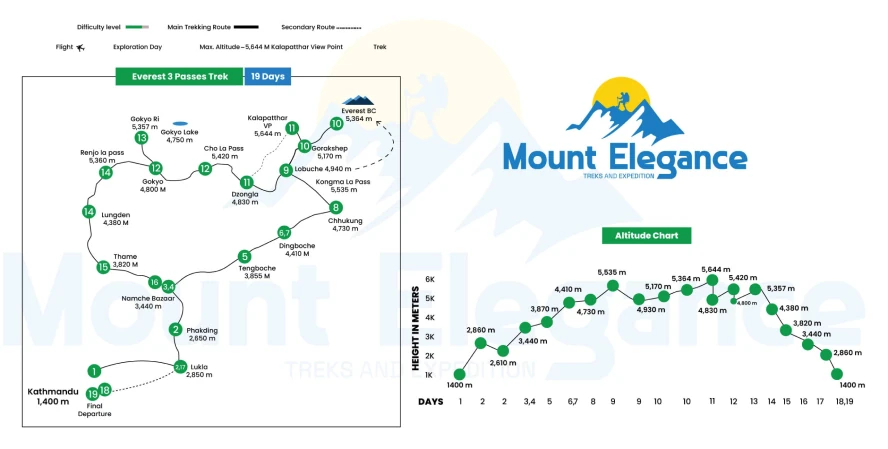
The map displays the Everest 3 Passes Trek route and altitude chart. It traces the loop from Kathmandu and Lukla through Namche Bazaar to Everest Base Camp (5,364 meters) and Kalapatthar (5,644 meters). It also highlights key side routes across Kongma La, Cho La, and Renjo La passes, Gokyo Lakes, and daily elevation gains.
On the right side passing Phakding and Namche through Tengboche, Dingboche, Lobouche, Goraksheep to reach Everest Base Camp is the classic base camp route.
The Classic Everest Base Camp route map covers around 130 km round trip over 8 to 10 trekking days. Gokyo and Cho La stretches out to about 150 km and 12 to 14 days, while Three Passes runs longest of the bunch at roughly 165 km over 16 to 18 days, with the steepest cumulative ascent by far. Jiri tacks on a long 250 km approach on foot before it even joins the classic trail, and Salleri/Thamdanda gives you a shorter, road-based alternative at about 160 km round trip. All five still reach Kala Patthar at 5,545 m as the highest point, though sleeping altitudes and acclimatization days shift depending on how many passes each route actually crosses.
Which is harder, Kilimanjaro or Everest Base Camp?
Kilimanjaro is higher but faster, making its rapid summit push physically harder with greater altitude risk over a short timeframe. EBC generally wins on toughness, mostly due to length and repeated high-altitude days rather than any single climb. Everest Base Camp involves a much longer, sustained multi-day endurance effort, though daily ascents are more gradual. The rapid rate of ascent leaves less time for the human body to adjust, resulting in a considerably higher immediate risk of actual mountain sickness.
Can a beginner climb Everest Base Camp?
Yes, a beginner can trek to Everest Base Camp if they have good physical fitness; the trek is non-technical, but daily walking of 5 to 7 hours over steep, uneven terrain requires solid endurance and gradual acclimatization to avoid high-altitude sickness.
Which EBC route is the easiest?
The classic route via Lukla is the easiest because it follows well-established trails with gradual elevation gains and simple teahouse infrastructure. It provides optimal options for proper acclimatization, regular rest stops, and standard 14-day itineraries.
Which EBC route is the hardest?
The three passes trek is the hardest because it demands crossing three challenging high passes: Kongma La, Cho La, and Renjo La, all above 5300 meters. Trekkers must be prepared for continuous high-altitude walks over glaciers and crossing scree.
What is the 2 pm rule on Everest?
The 2 pm rule means mountaineers attempting the summit of Mt. Everest must reach the top and begin descending by 2 pm, this rule can be applied during EBC trek as well.. The strict safety turnaround time prevents climbers from getting trapped in severe freezing afternoon weather or running out of supplemental oxygen in the dark.
Does the Gokyo route include Everest Base Camp?
Yes, the Gokyo route can include Everest Base Camp when taken as the Gokyo Lakes with EBC circuit. After exploring the beautiful turquoise lakes and scaling Gokyo Ri, trekkers cross the adventurous Cho La Pass to join the main trail toward Everest Base Camp.
Can I avoid flying to Lukla?
Lukla is the traditional gateway of the Everest Region however you can travel overland from Kathmandu to Salleri/Thamdanda by bus or jeep also, depending on road conditions. Taking these historical, low-altitude driving and trekking routes by passes the Lukla flight entirely, offering better natural acclimatization and quieter trekking trails.
Which route gives the best Everest view?
Kala Patthar and Gokyo Ri offer the absolute best panoramic views of Mount Everest. While Everest Base Camp itself sits directly beneath the peak, obscuring the summit, ascending these neighboring vantage points provides breathtaking vistas of the world's highest mountain.
How many acclimatization days are required?
At least two acclimatization days are required on standard Everest Base Camp itineraries to ensure safety. These rest days are typically scheduled at Namche Bazaar and Dingboche, allowing your body to adapt safely to the thinning air before ascending further.
What is the quietest Everest Base Camp route?
Renjo La and Jiri approach are the quietest routes in the Khumbu region. They bypass the heavily populated main trail from Lukla, allowing trekkers to experience untouched Sherpa culture, serene valleys, and peaceful mountain views away from standard trekking crowds.


