 Best Seller
Annapurna Base Camp Trek 8 Days with Flights
Duration
8 days
Acoomodation
Hotels, Tea houses
Maximum Guests
40
Highest Altitude
4,130m/ 13,545ft
Best Season
Mar-May & Sep- Nov
Start/End Point
kathmandu
Annapurna Base Camp with Flight Overview
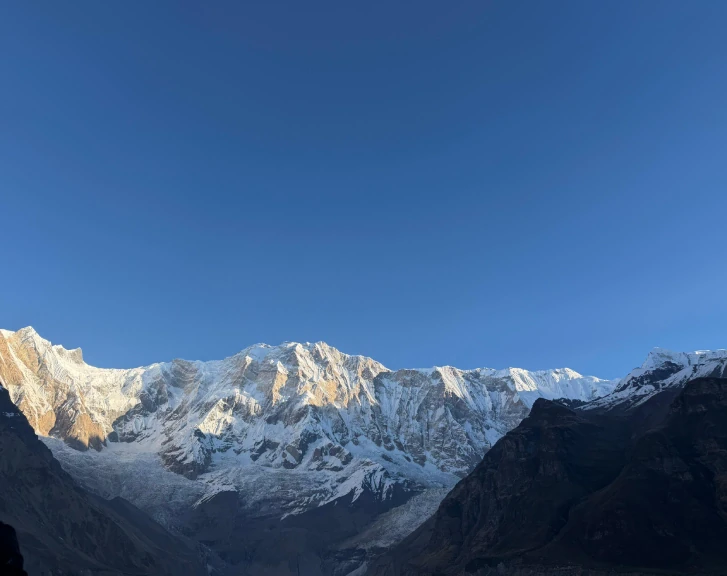
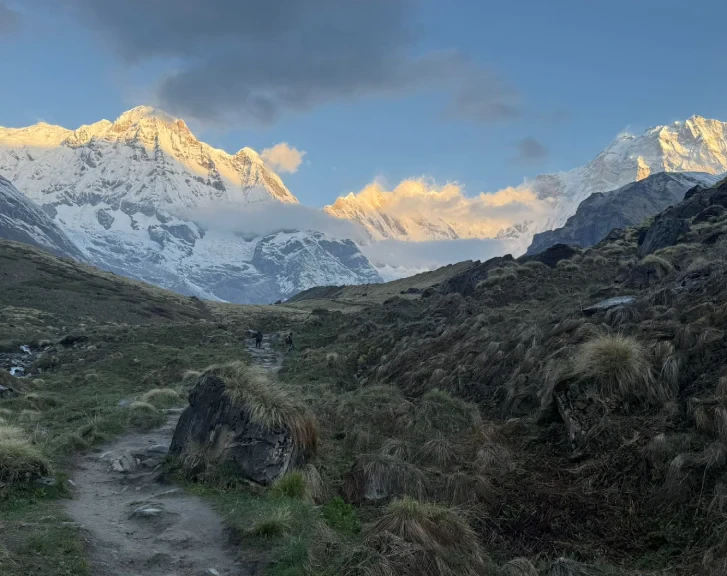
The Annapurna Base Camp Trek takes you through diverse landscapes, vibrant Gurung villages, and lush rhododendron forests, close-up views of the soaring Annapurna mountain range. Imagine trading the chaotic, horn-blaring streets of Kathmandu for the crisp air of the Himalayas in the blink of an eye. That is exactly how this journey begins.
Boarding a Kathmandu to Pokhara flight, souring through the High rising peaks. Enjoy the views of snow capped peaks appearing so close to your window. Getting nearer to Pokhara giant Phewa Lake will be visible. Landing on the newly made Pokhara Int airport and catching a short jeep ride to Jhinu Danda onward foot-travel begins.
Your boots hit the trail at the legendary Annapurna Sanctuary Trek, also recognized globally as the ABC Trek. From the very first step, the landscape pulls you into a living fairy tale passing through the historic Gurung villages of Chhomrong. But let’s be real, your legs will quickly face the mountain's true test as you fight your way up thousands of brutal stone stairs. Here, the scent of woodsmoke fills the air, and smiling locals welcome you into classic, cozy tea houses. There, you will swap stories, play cards with your local guides, and refuel on massive, steaming plates of authentic dal bhat and hot ginger tea.
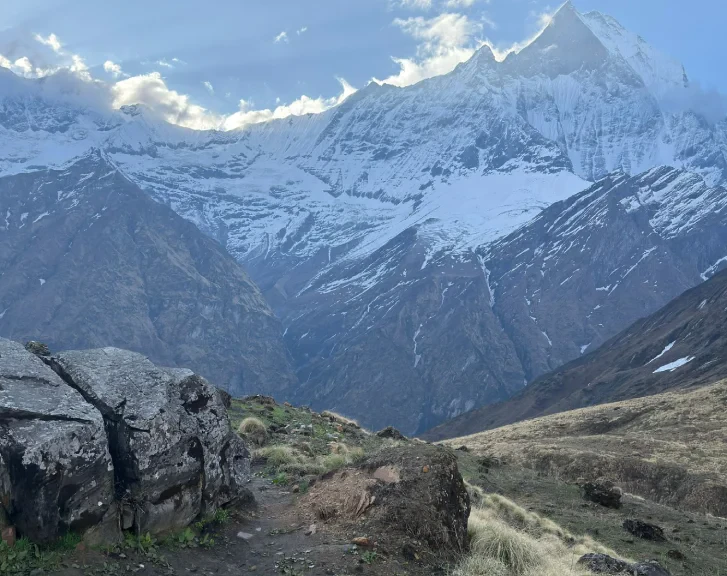
As you push higher past Himalaya, the lush, colorful rhododendron forests thin out, replaced by rugged bamboo and alpine terrain. The air grows crisp and thin. Soon, you reach Machhapuchhre Base Camp, where the iconic, fishtail-shaped peak dominates the skyline.
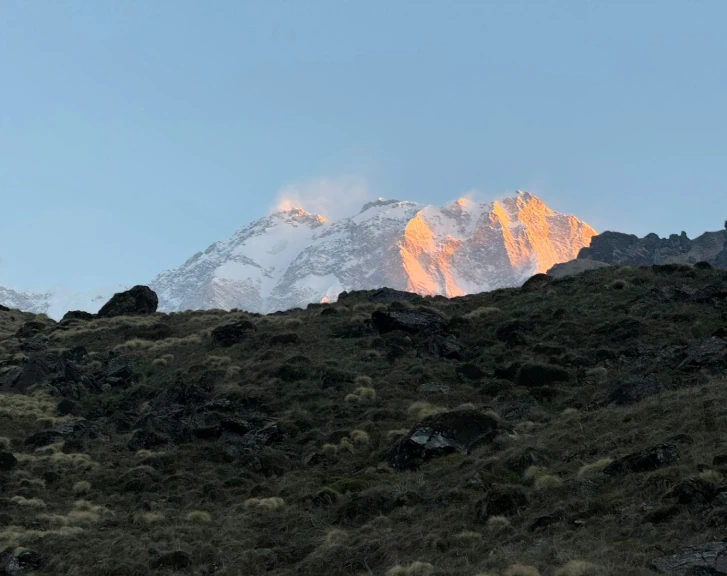
The ultimate grand finale awaits just beyond. Trudging into the heart of the Annapurna Sanctuary, you finally stand at Annapurna Base Camp where the afternoon sun suddenly dips behind the peaks and the temperature plummets. Standing at Annapurna Base Camp leaves you utterly speechless, elevated at a breathtaking 4,130 metres (13,550 feet). You are suddenly wrapped inside a colossal, 360-degree white amphitheater of giant, icy peaks, with the legendary Mt. Annapurna I towering majestically above you.
After absorbing the mountain magic, a swift Pokhara to Kathmandu flight whisks you back to civilization. This Annapurna Base Camp Trek 8 Days with Flight package is the perfect blend of modern convenience and rugged adventure, giving you the ultimate, fast-paced Himalayan experience in just one unforgettable week.
Annapurna Base Camp Trek Highlights
- Fast track route to ABC: ditching the long hours of transit from Kathmandu to Pokhara with Swift flight on domestic aircraft. Perfectly optimised for the short and quick visit that protects your vacation hours while delivering a full throttle Himalayan Adventure.
- Vibrant wilderness: Foot hits the trail along the Modi Khola valley leading up through the incredible Gurung villages and terrain transitions into thick rhododendron, oak, bamboo and alpine landscape.
- Ultimate views of one of the tallest mountain ranges in the world: Climbing the grand Annapurna Sanctuary, Pushing past the incredible Machhapuchhre Base Camp and Annapurna Base Camp to the jaw-dropping sunrise through the panoramic peaks featuring the clear views of Annapurna I, Annapurna South, Humchuli, and Machhapuchhre.
- Perfect trail: Tackle the physical challenges of high elevation trek and acclimatization stops in requires elevation to rejuvenate your body and keep the trekker safe. This itinerary is a fast track climb to Annapurna Base Camp within 3 days.
Why Choose the 8-Day ABC Trek with Flights?
The Annapurna Base Camp trek, 8 days with a flight, is a comfortable and great choice for trekkers who want to experience the Himalayas without spending extra days on the roads. A domestic flight connects with Pokhara International Airport, followed by an airport transfer and a private vehicle for the Jhinu drive. The flight does not go to Annapurna Base Camp, but you still can choose the helicopter option if you want a more comfortable trek journey, as the heli will directly take you to Annapurna Base Camp with slight changes in price included the trekking starts from Jhinu a local settlement and follows the Annapurna Sanctuary Trail through the Annapurna conservation area the Modi Khola valley, forest, and welcoming gurung community village known for mountain warm hospitality. This fast-paced trekking itinerary suits first-time visitors who are reasonably fit and comfortable with walking hours of hiking time per day.
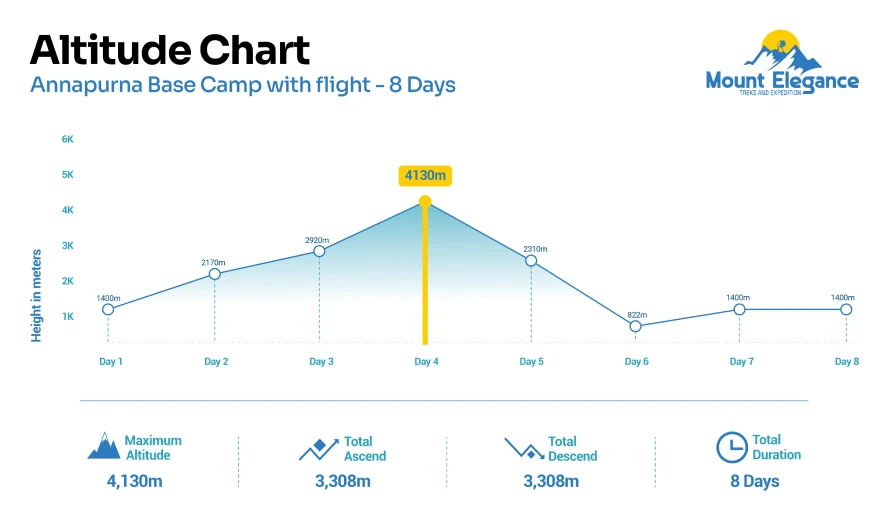
Altitude Chart
Annapurna Base Camp Trek 8-Day Itinerary
Download ItineraryWelcome to Nepal, the land of Himalayas. Pick up from the Tribhuvan International Airport by our representative and transfer to your hotel at Thamel. A pre-trip meeting will be held at the hotel lobby. Q & A, due settlement, insurance documents and all other formalities will be during the meeting. After that you will get free time to explore and purchase gears. Also try out local food/snacks Momo(dumpling), Newari Cuisine, Tibetan Cuisine, etc around Kathmandu while exploring the city.
Maximum Altitude: Kathmandu (1,400 m / 4,593 ft)
Drive Duration: 30-45 Minutes
During briefing, your insurance policy will be reviewed and due payment is settled. A document of non liability disclaimer for the trip will be provided for you to sign. A 3 star hotel in Kathmandu and Pokhara is provided in this package, with some additional charge hotel upgrades can be arranged, pre-information on upgrading hotel should be provided before arriving or while booking the trip.
Today your guide will meet you early in the morning at your hotel, you will pack up your gears in the company-provided duffel bag and leave for the hotel in a private vehicle. After checking in at the airport you will board a propeller plane(popular in domestic flight) to Pokhara, the lakeside city. On air you will get to see the incredible high mountains of the Himalayas right next to you.
Upon reaching Pokhara you will take a bus ride to Jhunu Danda along the winding roads famous in the Himalayas alongside the rivers flowing against you. Drive location may differ depending on the road condition. Upon reaching Jhinu Danda you will start trekking the forest covered trails to reach the Chhomrong village.
Maximum Altitude: Chomrong (2,170 m/7 ,119 ft)
Meal: Breakfast, Lunch & Dinner
Trek Duration: 3-4 Hour
Flight Duration: 25-30 Minutes
Drive Duration: 2-3 hours
Today will be a long walk going deep into the high altitude terrain. Navigating through the rugged main trail of ABC trek. Pushing past the tree line and vegetation into the alpine zone gaining ultimate height today settling in at elevation of 2920m above sea level. Today you will see noticeable change in terrain from the Chhomrong to reach Himalaya.
Maximum Altitude: Himalaya (2,920m/ 9,580 ft)
Meal: Breakfast, Lunch & Dinner
Trek Duration: 7-8 hour
You will reach the goal of the trip today reaching the Annapurna Base Camp. Trekking starts early in the morning as you begin to ascend the rugged trails, forest and tree line quickly fade to a broad and open grassy land. Crossing the tree line you will get to the mountainous snow covered path as you reach the ABC. Annapurna Base Camp (ABC), sitting at an elevation of 4,130 meters above sea level. The hike takes approximately 6 to 7 hours to complete.
Maximum Altitude: Annapurna Base Camp (4130m/13545ft)
Meal: Breakfast, Lunch & Dinner
Trek Duration: 6-7 hour
Today you will get up early in the morning to get a sunrise view from the closest viewing point in ABC. Soaking in the views of panoramic mountain ranges you will start the descent today on the same route. Passing Himalaya on your way back you will start to find alpine trees and bamboo forests. As you continue to descend the trees get denser and lush greenery returns as you will be dropping to 2310m upon arriving in Bamboo. Descend will be easier as you will return to the lower elevation.
Altitude: Bamboo (2,310 m / 7,578 ft)
Meal: Breakfast, Lunch & Dinner
Trek Duration: 6-7 hour
Today, the final day of your walking journey, you will quickly descend back to Jhinu Danda through the same route enjoying the views of the incredible Annapurna region. Enjoying the route back and maintaining the pace you will climb back down to reach the Jhinu Danda.
Upon reaching the Jhinu Danda you will get on the Jeep that will take 2 to 3 hours to reach Pokhara. The rest of the day will be free for you to roam around the city and relax on the lakeside after the long walking journey.
Altitude: Pokhara (822 m / 2,697 ft)
Meal: Breakfast & Lunch
Trek Duration: 4-5 hour
Drive Duration: 2-3 Hour
Today you will take a scenic mountain flight back to Kathmandu. Your guide will take you to the airport according to your flight schedule. On arriving at the airport you will take the similar prop plane back to Kathmandu. Upon arriving at Kathmandu you will be transferred to your hotel, later on the day a celebratory dinner will be organised by our company and a certificate of trek completion will be presented to you.
Altitude: Kathmandu (1,400 m / 4,593 ft)
Meal: Breakfast & Dinner
Flight Duration: 25-30 Minutes
Today marks the official end of your journey as you will be heading back home or to your next destination. According to your flight schedule our representative will drop you off at the airport. Do remember to share your departure schedule with our drop off team.
Hope your journey goes well and have a safe journey.
Altitude: Kathmandu (1,400m/ / 4,593 ft)
Meal: Breakfast
Drive Duration: 30-45 minutes
Looking at other options?
Compare this trip with our other itineraries.
ABC 11 Days
- Day 1 Kathmandu Arrival (1,400m) - 30 to 45 minutes drive. Overnight stay at a 3 star hotel in Kathmandu.
- Day 2 Drive from Kathmandu to Pokhara (822m)- 7 to 8 hour drive. Overnight stay at a 3 star hotel in Pokhara.
- Day 3 Drive to Birenthati and Trek to Ghandruk (1,940m)- 2 to 3 hour drive and 2-3 hour trek. Overnight stay at the tea house in Ghandruk.
- Day 4 Trek from Ghandruk to Sinuwa (2,340m)- 6 to 7 hours. Overnight stay at the tea house in Sinuwa.
- Day 5 Trek from Sinuwa to Deurali (3,230m) - 6 to 7 hours. Overnight stay at the tea house in Deurali.
- Day 6 Trek from Deurali to Annapurna Base Camp (4,130m) via Machapuchare Base Camp (3,700m)- 5 to 6 hours. Overnight stay at the tea house in ABC.
- Day 7 Trek from Annapurna Base Camp to Bamboo (2,310m) - 6 to 7 hours. Overnight stay at the tea house in Bamboo.
- Day 8 Trek from Bamboo to Jhinu Danda (1,780m) - 5 to 6 hours. Overnight stay at the tea house in Jhinu Danda.
- Day 9 Drive Back to Pokhara (820m) - 2 to 3 hours. Overnight stay at the 3 star hotel in Pokhara.
- Day 10 Drive from Pokhara to Kathmandu- 7 to 8 hours. Overnight stay at the 3 star hotel in Kathmandu.
- Day 11 Departure from Kathmandu- 35 to 45 minutes. Breakfast included.
North ABC 7 Days
- Day 1 Drive to Tatopani and Trek to Upper Narchyang (2,140m)- 5 to 6 hour drive and 2-3 hour trek. Overnight stay at the tea house in Upper Narchyang.
- Day 2 Trek from Upper Narchyang to Chhotepa (2,369m)- 5 to 6 hours. Overnight stay at the tea house in Chhotepa.
- Day 3 Trek from Chhotepa to Sandi Kharka (3,165m)- 5 to 6 hours. Overnight stay at the Tent in Sandi Kharka.
- Day 4 Trek from Sandi Kharka to North Annapurna Base camp (4,190m)- 6 to 8 hours. Overnight stay at the Tent in North ABC.
- Day 5 Trek from North ABC to Thulo Bugin (3,500m)- 7 to 8 hours. Overnight stay at the Tent in Thulo Bugin.
- Day 6 Trek from Thulo Bugin to Lete (2,010m) - 6 to 7 hours. Overnight stay at the tea house in Lete.
- Day 7 Drive from Lete to Pokhara (820m) - 5 to 6 hours. Farewell Dinner on this day.
Mardi 10 Days
- Day 1 Kathmandu Arrival (1,400m) - 30 to 45 minutes drive. Overnight stay at a 3 star hotel in Kathmandu.
- Day 2 Drive from Kathmandu to Kande & Trek to Australian camp (2,060m) - 7 to 8 hour drive & 2-3 hour hike. Overnight stay at a tea house in Australian Camp.
- Day 3 Trek from Australian Camp to Forest Camp (2,520m)- 6 to 7 hours. Overnight stay at the tea house in Forest Camp.
- Day 4 Trek from Forest Camp to Low Camp (3,050m) - 4 to 5 hours. Overnight stay at the tea house in Low Camp.
- Day 5 Trek from Low Camp to High Camp (3,580m)- 4 to 5 hours. Overnight stay at the tea house in High Camp.
- Day 6 Hike Mardi Himal Base Camp (4,500m) & back to High Camp - 6 to 7 hours. Overnight stay at the tea house in High Camp.
- Day 7 Trek from High Camp to Siding Village (1,700m) - 5 to 6 hours. Overnight stay at the tea house in Siding Village.
- Day 8 Drive from Siding Village to Pokhara (820m) - 3 to 4 hours. Overnight stay at the 3 star hotel in Pokhara.
- Day 9 Drive from Pokhara to Kathmandu- 7 to 8 hours. Overnight stay at the 3 star hotel in Kathmandu.
- Day 10 Departure from Kathmandu- 35 to 45 minutes. Breakfast included.
ABC Trekking Packages and Inclusions
Trip Includes:
Accommodation
- Twin-sharing/double accommodation in a 3-star hotel for 2 nights in Kathmandu and 1 Night in Pokhara including breakfast (Private room accommodation can be organized at an extra cost).
- Sharing guesthouse accommodation during the trek for 4 nights in the Annapurna Region.
Meals & Drinking Water
- All your standard meals during the trek (7 Breakfasts, 5 Lunches and 5 Dinners) including tea or coffee.
- Fresh seasonal fruits each day after dinner during the trek.
- A farewell dinner on the last night in Nepal.
- Purified drinking water during the trek using Water Filter or water purification tablets.
Transportation & Flight
- All (international and domestic) airport transfers on a tourist vehicle.
- Domestic Flight from Pokhara - Kathmandu - Pokhara
- Private Jeep from Pokhara- Jhinu Danda - pokhara
Guide and Staff
- Experienced, first-aid trained, government licensed, English speaking, and locally recruited Mount Elegance trekking guide (2 guides for group size more than 8 people).
- Porters during the trek for carrying luggage (1 porter for every 2 clients).
- Wages, accommodation, meals, gear, insurance and medications for all staff.
Annapurna Base Camp Trek Permits
- Annapurna Conservation Area Permit (ACAP) Permit.
- TIMS (Trekkers’ Information Management System) card.
Equipment and Takeaways
- 1 Mount Elegance duffel bag and Sleeping Bag (Should be returned after trek Completion)
- Mount Elegance Complimentary Tshirt, Cap and Route Map.
- A comprehensive first aid kit, including an Oximeter to check pulse and oxygen levels daily in the mountains.
- Trip completion certificate.
Administrative & Taxes
- All administrative expenses and government taxes.
Trip Excludes:
- Lunch and dinner in Kathmandu and Pokhara.
- International flight fare and airport departure tax.
- Nepal Entry Visa (Visa can be acquired easily after your arrival at Tribhuvan International Airport in Kathmandu with a fee of USD 30 for 15 days visa, USD 50 for 30 days visa and USD 125 for 90 days visa).
- Travel insurance along with high-altitude emergency evacuation coverage.
- Any beverages including bottled and boiled water.
- Tips to trekking staff and drivers.
- Personal trekking gear and equipment.
- Any expenses other than the Price Include section.
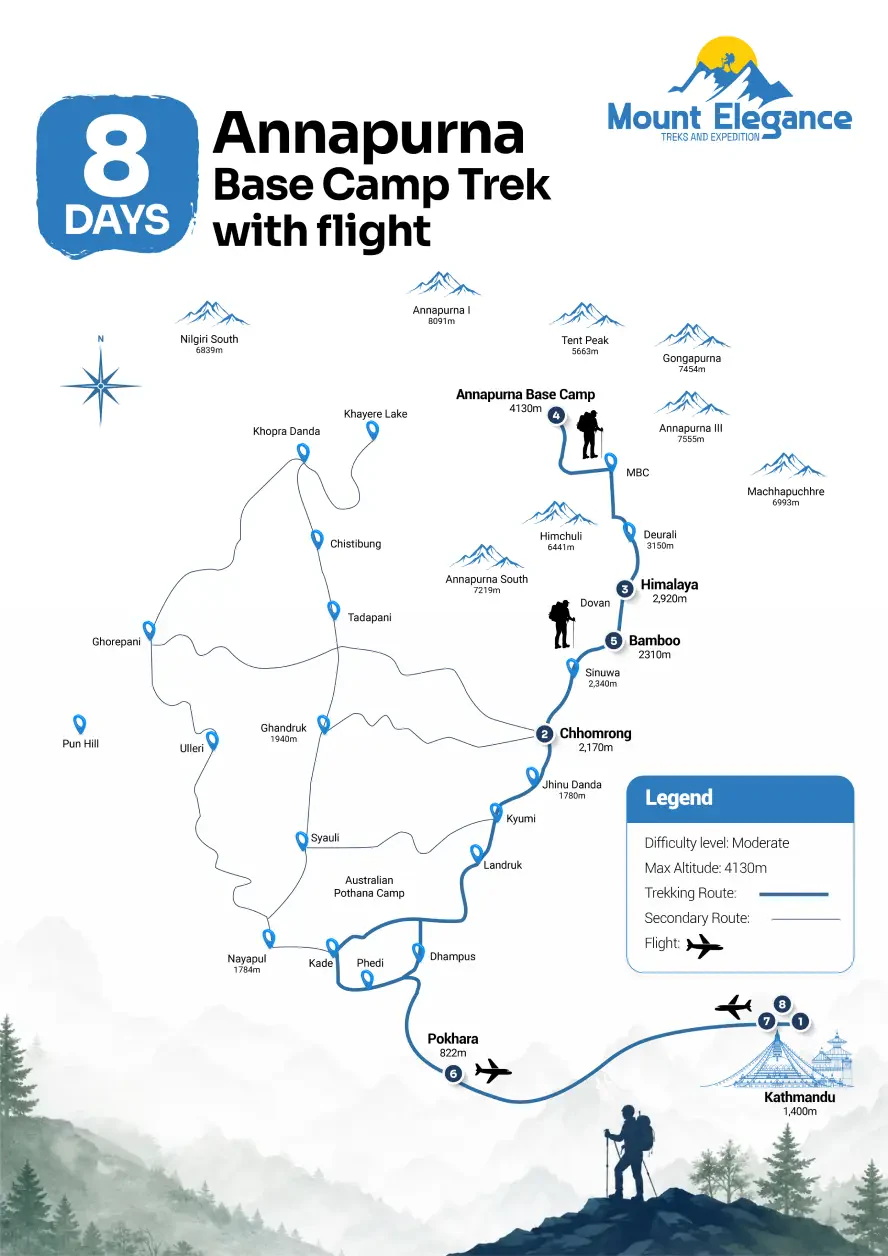
ABC Flight Map and Elevation
Departures
Packing List for the 8-Day Annapurna Base Camp Trek
Below are the necessary packing list for Annapurna Base Camp with flight, Some equipment provided by the company are also mentioned below and other necessary item which you can buy or rent from your host country or after arriving in Nepal.
Clothing (Layering System)
- Base Layer: 1–2 pairs of thermal tops and bottoms (high-grade synthetic).
- Trekking Shirts: 2–3 lightweight,long-sleeve shirts for sun and dust protection on the ABC trail.
- Trekking Pants: 2 pairs of stretchable and comfortable trekking pants.
- Insulation Layer: 1 warm fleece jacket or lightweight down sweater.
- Hard Shell: 1 breathable waterproof jacket and pants for wind, rain, or alpine snow.
- Underwear: 3–4 pairs of sports underwear.
Footwear
- Trekking Boots: 1 pair of ankle-supportive and water-resistant hiking boots.
- Camp Shoes: 1 pair of lightweight Sports sandals for relaxing in the teahouses.
- Socks: 3–4 pairs of thick merino wool trekking socks and 2 pairs of thin liner socks.
- Gaiters: 1 pair of breathable, waterproof gaiters to seal out snow.
Backpack and Storage
- Main Duffel Bag: 1 heavy-duty, weather-resistant 90L–120L duffel bag (to be carried by porters/yaks and will be provided by the company).
- Daypack: 1 technical 25L–30L daypack (carried by the guest) for layers, raincoat, water, camera, regular medicine, clothes for a day and snack, will be carried by yourself during trekking.
- Dry Bags: A collection of lightweight waterproof dry sacks to segregate and protect electronics and clothing. (It can be kept at duffel bag)
Technical and Trekking Gear
- Sleeping Bag: 1 Weather four-season sleeping bag rated down to at least -10°C (crucial for comfort at Annapurna Base Camp which will be provided by the company).
- Trekking Poles: 1 pair of adjustable trekking poles with snow baskets.
- Headlamp: 1 LED headlamp with extra lithium batteries (essential for the midnight and low-light areas).
- Water Storage: Insulated 1-liter Nalgene bottles (must handle boiling water) and thermal bottle jackets to prevent freezing.
- Glasses: 1 pair of high-protection UV Sunglasses.
Health and First Aid
- Altitude & Illness Medication: Diamox (Acetazolamide) for altitude acclimatization, a course of broad-spectrum antibiotics, and anti-diarrheals (Imodium).
- Water Purification: Purification tablets or chlorine dioxide drops to purify your tap water.
- Blister & Wound Care: Comprehensive blister kits (Compeed/Moleskin), athletic tape, sterile gauze, and elastic bandages.
- Personal Pharmacy: Rehydration salts (ORS), Ibuprofen/Paracetamol, and personal prescriptions.
Personal Items and Extras
- Sun Protection: SPF 50+ broad-spectrum sunscreen and dedicated SPF zinc lip balm.
- Sanitation: Multiple packs of pocket tissues, wet wipes (for camp showers), and high-alcohol hand sanitizer.
- Power Bank: 2 high-capacity (15,000mAh) heavy-duty power banks.
- Snacks: Energy gels, protein bars & chocolate, which will be taken as snacks during trekking.
Documents and Cash
- Identity & Visas: Original passport valid for 6+ months past travel dates, plus physical paper copies. Visa on arrival and which will be paid in cash.
- Permit: Annapurna Base Camp Area permit (ACAP)
- Insurance Certificate: Printed proof of comprehensive travel insurance covering search, rescue, heli-evacuation, and technical climbing up to 4,200 meters.
- Photos: 2 recent passport-sized photos for local permits and regional SIM cards.
- Cash: Carry nepalese rupee during trek while credit card might not be accepted to get some souvenir or other snacks. You can exchange to Nepali Currency after arriving in Kathmandu.
Final Tips
- Weight Limits: Keep your main duffel bag under 15 kg (33 lbs) to strictly comply with the flights and the porter will also carry 15 kg max per person.
- Freeze Prevention: Store your phone, camera batteries, headlamp, and power banks inside your inner jacket pockets during the day, and at a warm place at night to prevent freezing temperatures from killing the battery life in base camp.
Flight Delays, Cancellations, and Weather
Flights between Kathmandu and Pokhara are dependent on weather so delays or cancellations can happen due to mountain weather and low cloud cover. If needed, road transportation by tourist vehicle or private jeep can be arranged in additional charges. Additional expenses caused by flight delays, including accommodation, meals, or flight upgrades, are generally not included unless stated in your package.
Overnight Elevation | Altitude |
Kathmandu | 1400 m |
Pokhara | 822 m |
chhomrong | 2170m |
sinwa | 2340m |
Bamboo | 2310m |
Dovan | 2600m |
Himalaya | 2920m |
Deurali | 3230m |
Machhapuchre Base Camp | 3700m |
Annapurna Base Camp | 4130m ( 13,550ft ) |
Altitude Profile and Acclimatization
Stop | Altitude |
Kathmandu | 1400m |
pokhara | 822m |
ghandruk | 1940m |
chhomrong | 2170m |
sinuwa | 2340m |
bamboo | 2310m |
dovan | 2600m |
himalaya | 2920m |
deurali | 3200m |
Machhapuchhre base camp | 3700m |
Annapurna base camp | 4130m |
The itinerary gains elevation quickly in high-altitude , with maximum elevation reached at Annapurna Base Camp (4,130 m). A standard eight-day schedule lacks a dedicated rest day. Since acclimatization is an individual process, physical fitness does not guarantee immunity from altitude sickness. Track oxygen saturation, walk slowly, eat well, communicate if symptoms are seen early, and maintain proper hydration for general health.
How Difficult Is the 8-Day Annapurna Base Camp Trek?
The 8-day Annapurna Base Camp Trek is mid to advanced level trek because of its express itinerary, back to back trekking days, steep stone trail and sudden altitude gain so be mentally prepared to walk 5–8 hours daily to cover around 9–15 km with frequent uphill and downhill sections through high-altitude though the trail conditions can vary with the season and may include rain, mud, or snow making some sections more challenging. The fast pace also leaves limited recovery time between trekking days. Having good physical fitness and some previous trekking experience will help you complete the trek more comfortably and safely.
Is the Express ABC Trek Suitable for Beginners?
Yes, the Express Annapurna Base Camp Trek can suit beginners who have experienced trekking before and are in good general health and are mentally prepared for long walking days. It can be helpful to trek with an experienced guide, as they have good knowledge of using proper equipment and staying flexible to descend or adjust the route if needed are important. However, it is not ideal for those seeking a relaxed first trek or anyone without recent fitness preparation.
Recommended Pre-Trek Training
Prepare for the trek by doing regular uphill walks or climbing stairs and simple exercises such as brisk walking, cycling, or swimming. Add strength training for your legs as you will have long walking days in uphill practice, back-to-back hiking days, and train with a loaded daypack to build your strength. Whether you are a beginner trekker, experienced trekker, solo traveller, female solo traveller, student group, family, or senior traveller, your walking depends on your health, fitness, experience, trekking pace, weather conditions, and when to seek professional medical advice.
Annapurna Base Camp Trek 8 Days with Flights Cost
The 8 Day Annapurna Base Camp Trek with Flights costs between USD 800 to USD 1000 per person. The price usually includes domestic flights between Kathmandu and Pokhara, permits, accommodation, meals during the trek, ground transportation, and the services of a licensed trekking guide.
Group Cost
The total group cost depends on the number of trekkers and the level of service included in the package for example if your group has 8-11 number of traveller the cost will be around 820 USD so Larger groups usually enjoy a lower price per person because guide fees, transportation, and other operational expenses are shared among all participants.
Solo Trek Cost
Solo trekkers generally pay more than those traveling in a group because the cost of guides, private transportation, and other fixed services cannot be shared if there is a solo traveller he/she has to pay around 1020 USD. It is a good option for travelers who prefer flexibility or wilderness wanderer and a personalized comfort experience.
Domestic Airfare Cost
The package includes domestic flights between Kathmandu and Pokhara as these flights save several hours of road trip and make the 8-day itinerary possible and flight fares may vary depending on the travel season and airline availability.
Guide Cost
The guide cost covers the services of a government-licensed trekking guide as your guide manages the route, monitors your health, assists with accommodation and meals, and provides valuable information about the local culture and mountains. The guide typically charges around 25 USD per day.
Porter Cost
The porter fee covers carrying your main trekking bag during the journey as most porters carry luggage for two; they can charge around 20 USD per day for trekkers within the recommended weight limit, allowing you to trek comfortably with only a light daypack.
Permit Cost
The permit cost includes all required permits for the trek, such as the Annapurna Conservation Area Permit (ACAP) and other permits required under current Nepal trekking regulations the permit costs is around 3000 USD.
Accommodation Cost
Accommodation costs include comfortable teahouse stays during the trek and hotel accommodation in Kathmandu or Pokhara if included in the itinerary, as rooms are usually basic but clean and suitable for mountain trekking.
Meal Cost
Meals typically include breakfast, lunch, and dinner throughout the trek as teahouses offer a variety of local Nepali meals along with simple international dishes to provide enough energy for daily trekking.
Transportation Cost
Transportation costs cover all necessary ground transfers between airports, hotels, and the trekking starting and ending points. Depending on the itinerary, your travel is arranged by private vehicle or tourist vehicle.
Airport Transfer Cost
Airport transfer costs include pickup upon arrival and drop off before the departure. These transfers are usually provided by a private vehicle, making your arrival and departure smooth and simple.
Staff Insurance
Staff insurance is included for guides and porters to provide coverage in case of accidents or emergencies during the trek to ensure responsible and safe trekking operations.
Equipment Rental
Trekkers who do not own trekking gear can rent essential equipment such as a sleeping bag, down jacket, trekking poles, crampons in winter, and duffel bags for an additional cost.
Group Discounts
Most trekking companies offer group discounts based on the number of participants. As the group size increases, the price per person often decreases because transportation, guide services, and operational costs are shared.
Additional Expenses to Budget For ABC Trek
Travel Insurance Cost
Travel insurance is not usually included in the package so choose a policy that covers high-altitude trekking and emergency helicopter evacuation.
Tips for Guide and Porter
Tipping is a common practice in Nepal and is a way to thank your guide and porter for their service and support because they are someone who made the journey comfortable and enjoyable .
Hot Showers
Most teahouses charge an extra fee for hot showers, with prices generally increasing at higher elevations as being in higher altitude it is very difficult to provide essential necessities through transportation.
Charging
Charging phones, cameras, and other electronic devices usually requires an additional payment at mountain teahouses as it is hard to generate electricity in higher elevations so they normally save electricity for the travellers.
Wi-Fi
Wi-Fi is available in many villages for an extra charge, but the connection may be slow and unreliable at higher altitudes; being in a certain elevation there is a less chance of getting network access as they keep backup energies in many teahouses in lower villages.
Bottled Beverages
Soft drinks, bottled water, energy drinks, tea, coffee, and other beverages are available for purchase but become more expensive as you gain altitude as these beverages are not brought through transport in higher elevation they are brought by carrying by the locals.
Extra Meals
Meals outside your package, along with snacks, desserts, and drinks, are personal expenses that should be included in your budget.
Personal Trekking Equipment
If you need items such as a down jacket, sleeping bag, trekking poles, gloves, or gaiters, they can usually be rented or purchased at an additional cost.
Flight Delay Expenses
Weather-related flight delays may result in extra costs for accommodation, meals, transportation, or rebooking that are generally not included in the package.
Emergency Evacuation
Emergency helicopter evacuation can be very expensive if not covered by your travel insurance, making proper insurance highly recommended before the trek.
Best Season for the Annapurna Base Camp Trek with Flights
Spring (March to May) and Autumn (September to November) are the best seasons for the Annapurna Base Camp Trek with Flights as both offer clear mountain views, stable weather, comfortable temperatures and reliable flight conditions with proper trail to walk. Spring brings blooming rhododendron forests while autumn provides crisp skies, dry trails and excellent visibility for trekking.
Spring: March to May
The spring trekking season from March to May is one of the best times to trek Annapurna Base Camp with flight. You can experience Blooming rhododendron forests that brighten the trail with stable weather that provides excellent mountain views and good trail visibility as temperatures become cooler with altitude.
Autumn: September to November
The Autumn trekking season from September to November is the most popular time to trek the Annapurna Base Camp Trek with flight. Clear post-monsoon skies provide excellent trail visibility with good mountain panorama views along with that the trail conditions are generally stable, but high demand can affect lodge availability and flights. Temperatures become cooler toward late November, especially at higher elevations.
Winter: December to February
Winter offers peaceful trails with crisp mountain views with quieter trekking experience as the cold temperatures especially at higher elevations bring snow and icy sections that can make the trail more challenging. Some teahouses may close in remote areas, and weather can occasionally affect domestic flight schedules during this season.
Monsoon: June to August
The monsoon season brings frequent rain with high humidity and cloudy skies that often reduce mountain views. As trails can become muddy, slippery and affected by leeches in forested areas, weather-related flight delays are more common as flights are dependent on weather conditions , making this the least popular season for the Annapurna Base Camp Trek if you can do trek in monsoon as well.
Permits Required for the Annapurna Base Camp Trek
The Annapurna Base Camp Trek requires Annapurna conservation area permit ( ACAP ) and Trekkers information management system ( TIMS ) card are the necessary trekking permits before entering the region as these permits support conservation and visitor management so Most trekking companies arrange them for you before departure, making the process simple and allowing you to begin your trek without unnecessary paperwork.
Annapurna Conservation Area Permit
The Annapurna Conservation Area Permit is a mandatory permit for all trekkers entering the Annapurna Conservation Area; it helps fund wildlife conservation, environmental protection, trail maintenance as well as local community projects. The permit costs around NPR 3,000 for most foreign. To obtain an ACAP permit, you need a valid passport and visa, and your personal travel details. During the trek officials may check your permit at entry points and checkpoints such as Birethanti, Ghandruk, Chhomrong and other locations so carrying your documents along with your permit is recommended.
TIMS card
The Trekker Information Management System (TIMS) Card is a registration system introduced to help improve trekker safety and maintain trekking records, to support search and rescue operations in Nepal.This permit may or may not be compulsory so the registered trekking agency will handle your TISM card information. For this trekking package, whether a TIMS card is required depends on the special trekking route and the traveler's category, as permit regulations may change.
Documents Needed
- A copy of passport with 6 months of validity and visa with the time duration of the trip is required to apply for the permit.
- Passport sized photographs are also for applying for permits for the Annapurna region.
- In case of any emergency a form with all your contacts and emergency contact should be submitted to Mount Elegance before the trek.
- Travel insurance is mandatory for booking trips and will strictly check the coverage of the insurance to ensure your safety before the trip.
Accommodation and Meals on the Trek
Teahouse and Mountain Lodge Accommodation
Most of the accommodation on the trek will be in teahouses. When booking a teahouse accommodation or mountain lodge along the trekking lodge route, expect a standard twin-sharing room, with shared bathroom. Depending on lodge availability, you will find a cozy shared dining hall, hot shower, charging facility, and Wi-Fi facility. During the trek you may have to pay extra for some additional services such as hot showers, charging facilities and wifi.
Keep in mind that these amenities drop at high elevations, so packing a sleeping bag alongside the provided blanket is smart before returning to your comfortable Pokhara hotel.
Meals Available During the Trek
Talking about meals, almost all of the teahouses in this region will provide the menu of multicuisine dishes including chinese, indian, or continentals, etc. whereas, local dinner like Dal Bhat is a popular food and highly recommended for you to try.
Highly oily and heavy food is usually not recommended due to it being the main cause for the bloating and stomach discomfort. Whereas non-veg and canned food are also not a good idea during trekking these items usually are carried the same route you will be walking so the items may not be fresh and best quality. Digestion pills or any other recommended by the physicians is recommended to carry on this trek.
Drinking Water
Drinking water is another important topic in this trek, regular hydration is very important when trekking at high altitudes. Use lodge for boiled water instead of buying plastic bottles to help with the responsible reduction of single-use plastic. Always use water purification tablets for safety as all the sources are direct water from the redirected river streams. Note that while garlic soup is a popular lodge choice, it cannot medically treat altitude sickness.
Guide, Porter, and Trekking Safety
Licensed Trekking Guide
A licensed trekking guide is government authorized personnel to assist the travellers through the walking trails. It has been made mandatory to have a licensed trekking guide for any treks in Nepal by the law. A government-authorized Licensed trekking guide is legally mandatory to assist travelers through walking trails in Nepal. When trekking the Annapurna Base Camp route, having a Professional trekking guide ensures the ultimate safety of the trekkers. Seamlessly managing route navigation, an English-speaking guide who acts as a Local guide interprets regional heritage while sorting out permit checkpoints and lodge bookings to secure proper Guide accommodation and Guide meals for effortless room and meal logistics. They control your daily pace, which is vital for smooth altitude acclimatization. Crucially, guides track sudden weather shifts and watch for signs of altitude sickness. If things go wrong, their quick coordination of Emergency assistance, backup options, and chopper rescues ensures deep safety, fully backed by proper Guide insurance coverage.
Porter Service
Unlike trekking guides, trekking porter service is not mandatory. Having a porter is a choice of the trekker. They will assist you throughout the journey carrying your stuff to the destination and back to ensure the trekker has an enjoyable trip. To maintain fair labor practices, the standard porter weight limit follows strict ethical luggage limits of 20kg to 25kg total, usually shared between two hikers. Trekkers carry a recommended personal daypack for daily essentials. A fair porter salary runs around $20 to $25 daily. Legitimate agencies provide mandatory porter insurance for accidents. Finally, standard packages cover all porter accommodation and meals, ensuring the entire trekking crew stays healthy.
Is a Guide Compulsory?
Yes, it is legally mandatory to have a licensed trekking guide for foreigners hitting the ABC trail. True independent solo trekking is strictly banned by the law. All registered now handle digital E-TIMS permits, which check physical guide IDs at checkpoints. This strict policy guarantees crucial safety by ensuring professional route navigation, strict pace management for acclimatization, regular weather checks, and sudden symptom tracking. Plus, it secures immediate emergency help, backup route planning, and swift chopper rescues fully covered under guide insurance.
Safety and Emergency Preparation
Prioritizing safety and emergency preparation on Himalayan trails means carrying a solid first-aid kit packed with a variety of antibiotics and altitude pills. Always register your emergency contact details with our team before heading out. Make sure your travel insurance fully covers a high-altitude rescue and emergency evacuation up to 6,000 meters. If severe altitude sickness hits, a helicopter rescue must only be triggered as an emergency medical procedure, not a tour option. While remote medical facilities are far apart, local checkpoints run by the Himalayan Rescue Association provide incredible clinical support.
Altitude Sickness: Symptoms and Prevention
Altitude sickness causes headache, nausea, poor sleepy schedule while climbing too high with fast pace. To prevent it, go up slowly, take rest, and stay hydrated. If you feel sick, stop climbing immediately or head down to a lower elevation until you feel better.
Common Symptoms of Acute Mountain Sickness
Early signs of altitude sickness show up when your body struggles with less oxygen and thin air, a pounding headache is often the first sign, usually alongside nausea as well with complete loss of appetite. You might suffer from less sleep, feel dizziness, experience unusual fatigue, and notice shortness of breath beyond normal exertion.
Risk-Reduction Measures
To stay safe, ascend at a controlled pace and avoid competing with other trekkers. Maintain hydration, eat sufficient food, and avoid alcohol. Report symptoms early and follow the guide’s instructions. Do not ascend with worsening symptoms, and descend when symptoms become serious or continue to worsen.
Cultural and Natural Experiences Along the Route
Trekkers experience stunning natural shifts from lush forests to dramatic high-altitude landscapes. Along the route, you will explore traditional stone houses and connect deeply with the unique cultural heritage, local hospitality, and distinct daily lifestyles of indigenous Gurung and Magar mountain communities.
How to Book the Annapurna Base Camp Trek
- Visit Mount Elegance website.
- On the blue header section go the “Trekking in Nepal”.
- Under the subcategory choose the Annapurna trips.
- You will find a variety of treks in Annapurna region there.
- For this package, Choose Annapurna Base Camp Trek 8 days with flight.
- To book the trip click the yellow button on the right side of the site named “Book This Package” button(for desktop view).
- For your Phone, scroll up for a pop up for the button.
- Fill out the form and payment details.
Private and Group Departures
To join the group, scroll down to get to the “Departure Date“ section of the page, select the desired date and click the “Book Now” button. Fill out the form with your details, choose the required amenities and payment option. Check your total amount then click the “Book The Tour” button.
For the private departure you can directly book the package form the “Book The Package”. Then fill out the form and complete the process.
Customizing the Itinerary
To customize your itinerary choose the “Plan Your Trip” button on the header section of the site. Then fill out the form and submit the form. For customizing the specific itinerary:
On Desktop view: on the right section just below the “Book This Package & Inquiry Group Tour” you will find the small button “Customise this trip” click that. Fill out the package, detail, and any special request then submit the form. Our team will contact you for the customization.
On phone view: It will be easier to contact via Whatsapp. Tap the green whatsapp logo on the bottom right of your phone screen then you will be redirected to the whatsapp chat. For contacting the website click the three line on the top right on the list click the “Plan My Trip section” fill out and submit the form.
For any other information navigate to the “Contact Us” option there you will find ways to contact us.
Cancellation and Refund Policy
You will pay 10 percent of your total during booking the trip and the other 90 percent will be paid after arrival. Incase of cancellation due different cases:
Unforeseen circumstances beyond control may cause unexpected trip delays or require rescheduling, prompting flexible, availability-based alternatives. If official travel restrictions are imposed due to religious, political, or social factors, clients can postpone their journey or switch to an equivalent trip. However, Mount Elegance Treks is not liable for these unavoidable disruptions, making comprehensive travel insurance highly recommended. Additionally, crew safety guidance must be followed as trek leaders' decisions are absolute. Client cancellations forfeit the non-refundable 10% deposit, though remaining balances are returned, and absolutely no refunds are granted once the trek officially begins.



FAQs About the Annapurna Base Camp Trek 8 Days with Flights
General Information
The highest point is Annapurna Base Camp (4,130 m). You will usually hike 4–7 hours per day, depending on the itinerary.
The best seasons are spring (March–May) and autumn (September–November) for clear mountain views and pleasant weather.
Yes, domestic flights are included. You will fly between Kathmandu (or Pokhara) and Pokhara to save travel time before and after the trek.
Yes. It is suitable for beginners with a reasonable fitness level, but some preparation is recommended.
Preparation and Fitness
No. A moderate level of fitness is enough, but regular walking or hiking before the trek is recommended.
Practice walking, climbing stairs, and doing light cardio for a few weeks before your trek.
Carry a personal first aid kit, hand sanitizer, wet wipes, sunscreen, lip balm, and a reusable water bottle with water purification tablets.
Pack warm clothing, waterproof gear, sturdy trekking boots, a daypack, trekking poles, a sleeping bag, a headlamp, toiletries, and personal medications.
Health and Safety
There is a moderate risk because the trek reaches 4,130 m, but a proper itinerary helps reduce the chances.
yes altitude sickness is something that you should be worried about in trek as it can be worst is not treated on time.
Diamox can help some trekkers at higher elevations, but it should only be taken after consulting your doctor.
Your guide will arrange the fastest rescue, usually by helicopter, if the situation is worst and requires emergency evacuation.
Permits
No, if it's included in your package, your trekking company will arrange the required permits.
You will need your passport, passport-sized photos, and a valid Nepal visa.
You need the Annapurna Conservation Area Permit (ACAP) and Permit fees depend on your nationality.
Yes there are permit checkpoints along the trekking route, and your permits will be checked along the trekking route, so keeping the needed document with yourself is very important.
Insurance and Visa
Yes. Travel insurance that covers high-altitude trekking and emergency evacuation is strongly recommended.
yes most of the travel insurance covers helicopter evacuation but check that your policy specifically includes high-altitude helicopter rescue.
Most travelers can get a Tourist Visa on Arrival at Nepal's international airports as you need a valid passport, a completed visa form, and the required visa fee.
Guides and Support
A licensed guide is required for most trekking routes in Nepal, including the Annapurna Base Camp Trek. Hiring a porter is optional but recommended to make your trek more comfortable.
Your guide leads the route, manages permits, arranges accommodation, and assists in emergencies. A porter carries your main duffel bag, allowing you to trek comfortably with only a small daypack.
A porter usually carries up to 30 kg, which is generally shared between two trekkers. Each trekker is typically allowed up to 15 kg of luggage.
Tipping is not mandatory but is greatly appreciated. As a general guideline, you can budget around 7–8% of your total package cost to be shared among your guide and porter, depending on the quality of service and the size of your trekking team.
Accomodation
Advance booking is recommended during the busy spring and autumn seasons. At quieter times of the year, teahouses are usually available without prior reservations.
Yes. Most teahouses offer private twin-sharing rooms, and hot showers are available for an additional charge at many locations.
yes charging facilities are available but in higher elevation you have to pay extra cost to charge your electric device and even for wifi.
Local Nepali food like dhal, rice, soup, with limited international cuisine like dumplings, pasta, pizza, burger are also available during the trek.